
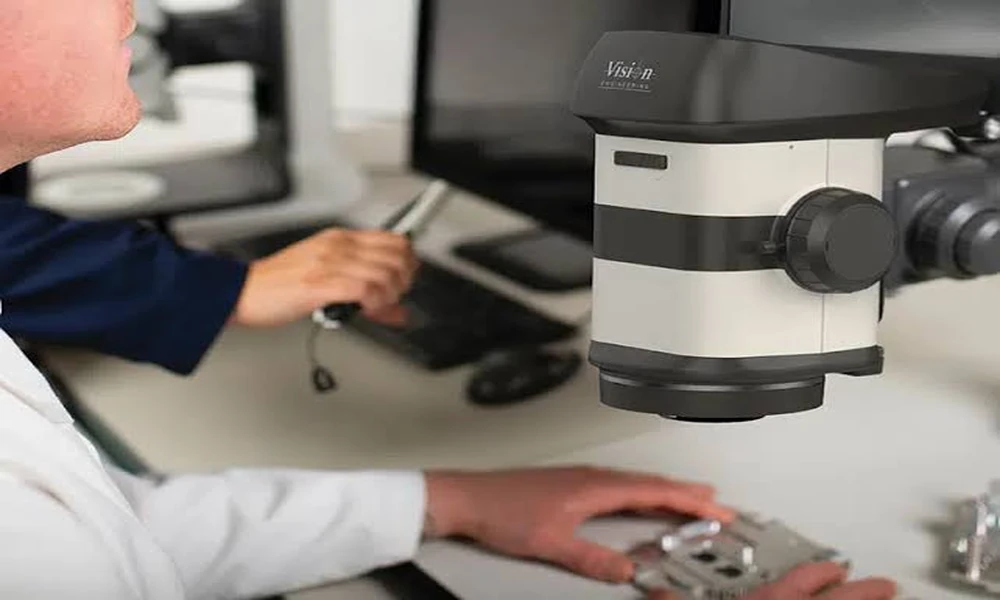
Inspection work often becomes tiring because viewing dictates posture. A fixed optical path keeps the operator close to one position. With an eyepiece less stereo microscope, viewing can move away from the specimen. That freedom changes bench layout, hand access, and working comfort. It also creates room for different inspection positions during detailed tasks.
Flexible Viewing Changes The Workbench
A separate display gives the operator more physical freedom. Instead of leaning toward oculars, the technician can face a nearby monitor. This change leaves the sample area easier to reach. It also helps when tools surround a small component during repair.
For example, a bench can support:
- A display placed at comfortable eye level.
- Tools arranged beside the inspection area.
- Samples turned without moving the viewer.
- Lighting positioned around the workpiece.
Each adjustment supports a more natural working posture.
Screen Position Can Shape Daily Comfort
Screen placement matters because repeated viewing builds physical habits. A monitor set too low encourages downward head movement. Raising it closer to eye level changes the viewing angle. From there, the operator can maintain attention without leaning forward repeatedly.
That benefit becomes useful during extended quality checks. Small posture changes can influence how comfortably technicians maintain visual focus.
Direct Access Makes Sample Handling Easier
Removing ocular tubes from the viewing path creates extra working space. An eyepiece less stereo microscope can send the magnified image toward a separate screen. The operator then handles the specimen from a more open position.
This setup suits electronics repair and assembly checks. Jewelry inspection can benefit from similar freedom. Small mechanical parts also become easier to approach from different sides.
Shared Viewing Supports Better Teamwork
A screen also changes how inspection knowledge moves. One technician can handle the sample while another watches. Both can discuss the same enlarged image without crowding one position.
This arrangement can support:
- Training beside an experienced technician.
- Quality checks involving another reviewer.
- Faster identification of visible surface defects.
- Clearer discussion during repair work.
The shared image becomes a useful reference.
Compact Layouts Give Operators More Choice
Bench space often becomes crowded during close inspection. Fixtures, lighting, tools, and samples compete for limited room. Separating the viewing point helps redistribute that space.
A camera head can stay above the workpiece. Meanwhile, the display can sit beside the operator. This arrangement keeps central access open for hands and instruments. Such flexibility becomes useful when inspection requires frequent sample repositioning.
Natural Viewing Can Improve Inspection Habits
Better positioning does more than reduce awkward movement. It can change how carefully an operator approaches repetitive visual work. When posture feels less restrictive, attention can remain focused on small details.
That difference matters during recurring checks. A technician may inspect circuit joints, polished surfaces, or tiny fittings for hours. Flexible viewing gives each task a position suited to its physical demands.
FAQs
Can screen-based microscopes support detailed inspection?
Yes, magnified stereoscopic images can provide clear views of small components.
Does monitor height affect working posture?
Yes, suitable height can reduce repeated bending during close visual tasks.
Can two people inspect one sample together?
Yes, a shared display allows both viewers to examine one image.
Which tasks benefit from flexible viewing positions?
Repair, assembly checks, quality control, and component inspection can benefit.
A Different Position Changes The Bench
A movable viewing point can reshape the entire inspection area. Once the display leaves the microscope head, hands gain more freedom around samples. A circuit board can remain centered while the operator sits comfortably beside it. The practical result is simple: the bench starts serving the inspection task, rather than forcing the task around fixed optics.

Comments are closed.