
Author

Rebecca Moreno

Browsing

I made the same mistake twice before I learned better. Booked a hotel in downtown Springfield, spent an hour circling for parking, then drove 40 minutes for dinner in Northampton. The room was fine. The location was wrong. Here is what I tell friends now. Pick your lodging based on what you plan to do, not on which hotel brand you already trust.

Western Mass is a chain of small cities strung along the Connecticut River, and the drive between them matters more than the thread count of your sheets. This guide walks through the tradeoffs, then gives you a way to decide in about ten minutes. If you want to browse listings directly, Explore Western Mass keeps a solid roundup of places to stay near Springfield MA and the surrounding towns.

Why the Base Town Matters More Than the Hotel

Springfield sits at the bottom of the Pioneer Valley. Northampton is about 20 minutes north. Amherst and Hadley are another 15 past that. Holyoke and West Springfield sit in between. Each town has a different personality, and that personality shapes your whole trip. Book in Springfield if you’re here for the Basketball Hall of Fame, a Thunderbirds game, or a concert at the MassMutual Center. You can walk to dinner and skip the car entirely. Book in Northampton if you want walkable coffee shops, live music, and a downtown that feels like a small city that never grew up. Smith College is right there.

Book in West Springfield or Holyoke if you’re passing through on I-91 and just want the cheapest clean bed with easy highway access. There’s no shame in that. I’ve done it.

Book in Amherst or Hadley if you’re touring colleges or hiking the Holyoke Range. UMass keeps the area lively during the school year and quiet in summer.

One thing most travel sites won’t tell you: the drive between these towns feels longer than the map suggests during weekday rush hour. I-91 north of Springfield backs up reliably between 4 and 6 p.m. If your lodging is in Northampton but your dinner reservation is in Springfield, plan for double the drive time you’d expect. That one fact has saved me from more than one ruined evening.

What Should You Actually Pack for Western Mass?

Nothing about lodging decisions makes sense until you know what you’ll be doing outside. Western Mass is a four season destination, and the lodging math changes with the weather.

  • Fall (late September to mid-October): Leaf season. Book three months ahead or you’re paying double for whatever’s left. Layers matter, mornings are cold.
  • Winter: Ski country opens up north in the Berkshires. Roads get icy on Route 9. Choose a hotel with covered parking if you can.
  • Spring: Mud season. Hiking trails in the Holyoke Range can be slick. Rainfall adds up, so pack a real rain jacket, not a windbreaker.
  • Summer: Tanglewood, festivals, and river tubing. Book early for anything near Northampton or Lenox.

The National Park Service manages several historic sites across the region, including the Springfield Armory, so if you’re building a trip around public lands, check the National Park Service site for seasonal hours before you lock in dates. Some sites close entirely in winter.

A Decision Framework I Actually Use

I call this the 30-20-10 rule. It’s not scientific, it’s just how I’ve learned to book.

30 minutes: How far am I willing to drive to the thing I came here for? If the answer is 30 minutes or less, book the cheapest decent hotel within that radius. Brand loyalty matters less than proximity.

20 percent: What share of my budget am I willing to spend on lodging? For a weekend trip, 20 percent is a good ceiling. Spend less on the room, spend more on food, tickets, and gas.

10 checks: Before I book, I do ten quick checks. Free parking? Real reviews from the last 90 days? Distance to the nearest grocery store? Pet policy? Breakfast included? Cancellation window? Highway noise from a room facing I-91? Elevator or walk-up? Late check-in available? Actual bed size vs. listed bed size?

That last one catches people. A “queen” at some older properties is really a full. Read the reviews carefully.

Chain Hotel or Independent Inn?

Western Mass has both, and the split is worth understanding before you commit.

Chains cluster along the highway corridors. You know what you’re getting: consistent rooms, reliable Wi-Fi, loyalty points, and front desks that handle late arrivals without complaint. If your trip is one night and you’re passing through, this is the move.

Independent inns and B&Bs are scattered through the hill towns and along the river. Deerfield, Shelburne Falls, and the Berkshires have some genuinely lovely properties. You trade predictability for character. Breakfast is usually better. Check-in hours are often tighter, sometimes 9 p.m. or earlier, so call ahead if you’re arriving late. My honest take: if you’re staying two nights or more and you’re not tied to a specific event, book the independent inn. The memory of a good breakfast on a front porch outlasts the memory of a loyalty point. But if you’re arriving after dark on a Friday, chain wins. Every time.

Booking Windows and Why They Matter Here

Western Mass is not Boston. The supply of rooms is limited, and demand spikes hard around a handful of weekends each year.

According to tourism data from the Commonwealth of Massachusetts, the state’s visitor economy is concentrated heavily in the fall, and the Pioneer Valley sees a serious bump during foliage season. That means if you’re booking for Columbus Day weekend, the room you want may already be gone by late August.

Here’s my rough rule.

Season Book This Far Ahead
Foliage weekends (Oct) 10 to 14 weeks
Summer weekends (Jun to Aug) 6 to 8 weeks
College move-in and graduation 10 weeks
Winter midweek 2 to 4 weeks
Any random Tuesday in March Same day is fine

Mobile searches for lodging in a new city spike hard right before a trip, which is why last minute inventory looks thinner than it really is. Google’s own research on travel search behavior shows that most trip-related searches happen in the days and hours before arrival. Planning earlier puts you on the other side of that curve, and that’s where the good rooms live.

The One Thing I’d Get Right

Everyone obsesses over the hotel brand. The base town is what actually determines whether your trip feels relaxed or rushed. Pick the town first. Then let the hotel list narrow itself.

So where are you headed first, Springfield for the museums, Northampton for the music, or somewhere quieter up the valley? Answer that and the lodging question mostly answers itself.


Peptide research has expanded considerably, and so has the volume of claims circulating about what these compounds can do for female muscle growth. Evidence does not support all of those claims. The mechanisms underlying some of them were shown to exist in cell cultures or animal models, while others were extrapolated from studies of male subjects. The peptide research in female populations covered on musculoskeletalkey.com illustrates how there is usually a gap between plausible mechanisms and documented outcomes in human subjects.

What makes a peptide claim credible?

The first question worth asking about any compound claim is where the supporting data actually comes from. A peptide that has demonstrated an effect in a male rat model has not demonstrated the same effect in active women. Both subject populations differ biologically in a number of ways that affect how the mechanism of a compound translates into a real outcome. Claims that skip over that distance without acknowledging it are drawing a longer inferential bow than the data supports.

Study design quality is a second filter. Randomised controlled trials with female subjects produce more reliable findings than observational data or single-arm protocols where no control group exists. Many peptide compounds have been studied extensively in one methodology and barely at all in others, which means the confidence that should accompany their claims varies considerably. A compound appearing in fifty studies, all using the same animal model, carries less transferable certainty than one examined across multiple study types with human female cohorts present in at least some of them.

How do extrapolated claims get treated as fact?

Mechanistic plausibility is one of the more common pathways through which unverified claims gain traction. If a compound stimulates GH release, and GH is known to support lean muscle tissue, then the compound supporting lean muscle tissue in women becomes an easy inference. The problem is that the chain from GH stimulation to female muscle adaptation passes through several biological steps, each of which is influenced by estrogen levels, cycle phase, receptor sensitivity, and nutritional state. A plausible mechanism is not a demonstrated outcome, and the gap between those two things is where a significant portion of circulating peptide claims quietly sit.

Reports based on anecdotes fall into this category. Results reported by individuals using peptide compounds do not adjust for placebo effect, training variables, nutritional changes, or natural changes in muscle adaptation. An impression of documented efficacy can be created when individual reports conform to the same description. For female subjects specifically, the variation introduced by cycle phase alone is enough to make self-reported muscle outcomes across weeks or months extremely difficult to interpret without controlled conditions.

Evaluating claims by evidence tier

  1. Female-specific controlled studies with lean mass as a primary endpoint carry the highest evidential weight. These are the least common in the peptide literature and the most directly applicable to women researching muscle growth outcomes.
  2. Mixed-sex controlled studies with female subgroup analysis sit a tier below. The findings are relevant but require checking whether the female subgroup was large enough for the analysis to carry statistical meaning rather than being a post-hoc observation on a small number of subjects.
  3. Male-only studies with mechanistic extrapolation to female populations are the most common category in peptide research and the least reliable for female-specific claims. The mechanism may be real, but the female outcome is inferred rather than measured.
  4. Animal model data with no human replication sits at the base of the evidence hierarchy regardless of how compelling the mechanism appears in the preclinical context.

Claims that do not specify which tier of evidence supports them are asking for a level of trust the data may not have earned. That distinction is the clearest starting point for reading female muscle growth peptide claims with genuine critical scrutiny.

Sixty years ago, the only real way to confirm bone loss was to watch someone break a bone. That’s not a dark joke. That’s the clinical reality before modern densitometry existed. A plain X-ray could only flag bone loss after 30 to 40 percent of bone mass had already vanished, which meant the window for early action was basically nonexistent.

The story of how the field went from that bleak starting point to today’s radiation-free scanning is one of the more underappreciated arcs in modern medicine’s history. It touches on nuclear physics, university labs, a regulatory shift in the 1980s, and, most recently, a technology from Italy that processes ultrasound signals in ways that weren’t computationally possible a generation ago.

The Crude Beginning: Plain Radiographs and Their Obvious Problem

Through most of the mid-twentieth century, physicians relied on conventional radiographs to get any sense of skeletal density. The method was simple, widely available, and fundamentally flawed for this specific purpose. Bone simply doesn’t show meaningful change on a plain film until the loss is severe. By the time a radiologist flagged something alarming, a patient had usually already suffered a fracture or was on the edge of one.

The clinical frustration with this limitation pushed researchers toward a better approach. Single-photon absorptiometry emerged in the 1960s, developed largely through research at the University of Wisconsin, and marked the first time clinicians could actually measure bone mineral at a specific site rather than estimate it visually. Research by the University of Wisconsin in the late 1960s and early 1970s led to the commercial launch of a stand-alone bone densitometer, according to the American Association for Medical Instrumentation. The patient had to sit with a limb immobilized for roughly ten minutes, but it was a genuine step forward in measurable precision.

The problem was that single-photon systems only worked reliably on peripheral sites like the wrist. They couldn’t assess the hip or spine, which are the sites where fracture risk matters most.

The DXA Era: A Leap Forward That Defined a Generation

The real turning point came in the late 1980s. Dual-energy X-ray absorptiometry, known as DXA, landed commercially and almost immediately reset the clinical standard. In 1987, Hologic developed the first bone densitometry device using its proprietary DXA technology, establishing a performance benchmark that would dominate the field for the next three decades.

DXA works by directing two X-ray beams at different energy levels at the patient’s skeleton. By comparing how each beam attenuates through bone versus soft tissue, the system calculates bone mineral density with meaningful precision. The patient reclined on a table rather than holding a limb still. The hip and lumbar spine could both be assessed. Results came back as a T-score, a standardized number comparing the patient’s density against a young adult reference population.

This was a genuine leap. But DXA carries ionizing radiation, requires a clinical referral in most settings, and involves bulky, fixed equipment. For routine screening of an aging population at scale, those aren’t trivial limitations. According to a 2021 NCHS Data Brief from the CDC, the age-adjusted prevalence of osteoporosis among U.S. adults aged 50 and over was 12.6%, with rates among women reaching 19.6%. That’s an enormous population that needs regular monitoring, not a single diagnostic snapshot.

The infrastructure gap between how many people need bone density tracking and how many can realistically access repeated DXA scanning has been a persistent problem in preventive care. DXA solved the accuracy problem. It didn’t solve the access problem.

The Diagnosis Gap Nobody Talks About

Here’s the uncomfortable reality that the DXA era didn’t fix: most people with bone loss still don’t know they have it. A 2025 study published in PubMed using NHANES data found that 69.12% of individuals with osteoporosis went undiagnosed, with the highest undiagnosed rates among men and adults in the 50 to 59 age group, where the condition is easily missed before obvious symptoms emerge.

This isn’t a failure of the technology. DXA is accurate. It’s a failure of reach. When scanning requires a physician referral, a covered diagnosis code, a fixed radiology suite, and a follow-up appointment to get results, a predictable portion of the at-risk population never gets in the door. The undiagnosed majority isn’t skipping screenings because they don’t care. They’re skipping because the friction is high and the urgency feels abstract until a fracture makes it concrete.

The substantial and increasing prevalence among certain groups, along with the lack of diagnostic capture, highlights existing gaps in public health efforts and care delivery infrastructure. (PubMed Central, 2025, analyzing NHANES data from 2005 to 2018)

That gap is exactly what the next wave of scanning technology set out to close.

REMS: The Third Era of Bone Density Scanning

If single-photon absorptiometry was the first era and DXA defined the second, then Radiofrequency Echographic Multi-Spectrometry is best understood as a third-era technology built to solve the access problem without sacrificing accuracy.

REMS uses ultrasound rather than ionizing radiation. A handheld probe acquires unfiltered echographic signals at the hip and lumbar spine. Those raw signals are then analyzed in the frequency domain and compared against reference models to calculate bone mineral density. The key distinction from older ultrasound attempts is that REMS doesn’t just measure signal transmission speed. It processes the full spectral content of the reflected signal, which carries far more structural information.

The clinical validation behind REMS is substantial. A European multicenter study published in the journal Bone found that both REMS sensitivity and specificity exceeded 90% when compared against DXA as the reference standard, according to Contemporary OB/GYN’s 2020 reporting on the research. The Pearson correlation between DXA-measured and REMS-measured bone mineral density was above 0.93 across both assessment sites, a correlation level that clinicians take seriously.

The practical implication is that a provider offering an Echolight REMS bone density scan in MN can deliver accuracy that rivals the hospital-based gold standard without radiation exposure, without a referral requirement, and without the logistical overhead of a fixed radiology suite. For someone who wants to know their bone status and doesn’t want to wait six weeks for a referral appointment to materialize, that matters.

A Practical Lens: The Three Eras Side by Side

Era Technology Decade Introduced Radiation? Axial Sites? Access Model
First Era Single-Photon Absorptiometry 1960s Yes (low) No (peripheral only) Clinical referral required
Second Era DXA 1980s Yes (low) Yes Clinical referral required
Third Era REMS 2010s No Yes Direct access, no referral

What This Means If You’re Due for a Scan

Understanding this history changes how you think about your options. DXA is still excellent and still the standard of care in clinical diagnosis. But it isn’t the only accurate choice anymore, and for routine monitoring or initial screening, the constraints of the DXA model can push important decisions further into the future than they should be.

If you’re over 50, have a family history of fractures, or are entering a period of life where skeletal changes accelerate, here’s a practical way to think about it:

  • If your goal is a one-time diagnostic scan ordered by your physician following a fracture, DXA in a clinical setting is appropriate.
  • If your goal is regular monitoring of bone health progress over time without radiation exposure and without navigating a referral, REMS is worth knowing about.
  • If you’ve been told you have osteopenia and want to track your bone density every six to twelve months, the radiation-free aspect of REMS becomes practically relevant at that frequency.

The field has moved far from the days when a broken hip was the first data point. Six decades of engineering and clinical research produced options that didn’t exist when your parents were your age. Using them is the straightforward part. Knowing they exist is the harder first step, and that’s exactly why the history of this technology deserves more attention than it usually gets.

What would change about how often people got screened if bone density checks were as accessible as a blood pressure reading? That’s the question the third era of scanning is quietly trying to answer.

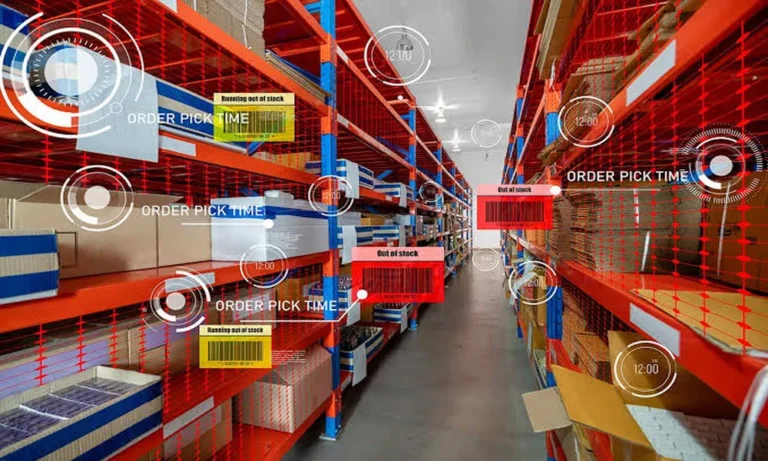
No single major mistake is likely to sink a warehouse. It starts with a few minutes here and there: an employee cannot locate something, stock levels are obsolete, or an order sits for too long waiting to be packed. The right warehouse management system can bridge these processes and maintain a steady flow of goods.

But not all operations are alike. Most businesses are planning to keep the stock in a simple way and some need complex automation. Different types of warehouse management systems are also helpful to select the software that suits your day-to-day job.

The Warehouse Technology Ladder

You can think of a warehouse system as an evolution. Every level provides additional control, visibility, and automation.

Level One: Basic Inventory Control

The simplest systems are purely about what is in stock and where it can be found. They may include tracking the quantity of a product, location of storage, receipts, and shipments.

Such a system can automate flagging of manual spreadsheet, as well as common stock errors. This is usually sufficient for a small warehouse with a limited product range and stable order volume.

Level Two: Task-Based Warehouse Management

Higher-end systems take care of what happens behind each order. They assign assistant receiving, picking, packing and shipping to their employees.

The software can also suggest choices, such as, whether to pick routes or put similar orders together. These features can save walking time with staff completing more orders in their shifts.

Level Three: Connected Warehouse Operations

In contrast, a connected WMS connects the warehouse with other business systems. Those might be ERP, as well as sales, purchase, transportation, and customer service platforms.

When systems exchange data, teams can be confident to see shifts in inventory sooner. Sales personnel can give more accurate timeframes for delivery, while purchasing teams will answer low levels of stock faster.

Level Four: Automated Warehousing

Still, other warehouses require software that can integrate seamlessly with scanners, conveyors, automated storage solutions, robotic systems, or RFID.

An automated WMS tells machines and workers where to go, what work to do based on order priorities, products, and their locations, resources available. Although this increases speed and accuracy, it requires a heftier investment while staff training may be required too.

Another Key Difference: Where the Software Runs

Warehouse management systems can also come in different types by hosting model.

  • Cloud-based WMS: Software is hosted online by the provider. It offers simple upgrades, more accessible remote access and cheaper initial hardware costs.
  • On-premise WMS: A company must implement and manage system itself. Although it provides pretty-darn control, but can be regarded inside delivering tech support.
  • Hybrid WMS: This solution is a mixture of cloud and on-premise tools. This may be ideal for enterprises with specific security, interoperability, or other data requirements.

Use Your Workflow as the Test

Map the steps of your data flow, from when you receive data to shipping step before selecting system. Identify areas where there are delays, duplication of data, errors in stock, and reliance on single digit task expiries.

Then compare systems based on:

Not always the most advanced system is the best. The one that fixes actual problems and does not make them worse. A realistic assessment of your workflow can help you decide among the types of warehouse management systems to make a choice that boosts accuracy, productivity, and customer service.

Introduction

Singapore has various photography companies offering graduation portraits, workshop sessions, outdoor shoots, and even graduation ceremony coverage. Every company has its own specialties in capturing graduation photoshoots. Here are five options to consider for choosing a graduation photo studio.

H2 Photo Studio

h2 graduation photo studio specializes in professional graduation photography and offers sessions for individual graduates, couples, classmates, and families.

1. Why Choose H2 Photo Studio?

  • Live pose guidance helps graduates feel confident.
  • Individual and group graduation packages are available.
  • Family members can take part in the session.
  • Professional backdrops and outfit changes are available.
  • Graduation gowns for selected universities may be available.
  • Outdoor graduation photography can also be organized.

2. Location:

28 Sin Ming Lane, #02-138, Midview City, Singapore 573972

3. Contact:

+65 9151 5311

The Borealis Studio

The Borealis Studio offers graduation photography as part of its behavioral photography services. Its approach integrates polished description with an editorial style, making it appropriate for graduates who want photographs that look advanced while still feeling personal.

The association offers studio and outdoor sessions, allowing graduates to select between regulated lighting and Singapore’s outdoor surroundings. Its graduation packages contain retouched photographs and high-resolution digital files.

1. Why Choose The Borealis Studio?

  • Editorial-style graduation fine art.
  • Studio and outdoor alternatives.
  • Professional editing included.
  • High-resolution digital photographs.
  • Pre-shoot conference is available.
  • Suitable for graduates wanting a more up-to-date visual style.

2. Contact:

+65 8988 7567

Dato Photograph

Dato Photograph is a well-established Singapore photography company with more than 15 years of experience. Its services involve personal portraits, family photography, events, and various professional photography work, making it a versatile alternative for graduation portraits.

Graduates can choose their preferred concept with the photography crew, from formal academic portraits to more creative private images. Its photographers again provide styling advice and pose coaching during meetings.

1. Why Choose Dato Photograph?

  • More than 15 years of photography experience.
  • Professional pose guidance.
  • Styling recommendations before and during the shoot.
  • Studio and location photography.
  • Suitable for individual and group portraits.
  • Experienced team accompanying varied photography backdrops.

2. Contact:

+65 9484 4344 / +65 9271 9166

STUDIO03

STUDIO03 provides professional portrait photography in a private studio setting. While its core services include profile and portrait photography, its portfolio and service information also position the workshop as an option for achievement portraits such as graduation photography.

1. Why Choose STUDIO03?

  • Private and easy studio environment.
  • Professional portrait photography.
  • Hair and composition services are available.
  • Style and editing can be discussed with the team.
  • Suitable for new graduation portraits.
  • Convenient Lavender Street locale.

2. Contact:

+65 8921 3209

ZEM Productions

ZEM Productions offers graduation photography and event-related photography services in Singapore. The company has, in addition to 10 years of photography and video production experience, and provides graduation-distinguishing services alongside fuller event production.

1. Why Choose ZEM Productions?

• Dedicated graduation photography services.

• More than 10 years of production experience.

• Studio and event photography capabilities.

• Options for graduation ceremony coverage.

• Suitable for graduates lacking photographs and event memories.

• Photography and video production knowledge under one company.

2. Contact:

+65 8095 0785

Conclusion

Before making an engagement, review each studio’s portfolio, discuss your preferred style, and ratify the package details. Whether you want a classic cap-and-gown portrait or an imaginative celebration with friends and family, a smoothly projected graduation photoshoot can create a lasting memory for years.

Money tells a story before results become obvious. Careful records reveal patterns that daily activity often hides. Leaders gain confidence through reliable figures instead of assumptions. Good decisions begin with trustworthy information rather than uncertain estimates. For that reason, λογιστικές υπηρεσίες remain an important part of modern commercial management. They help organizations maintain order while preparing for future opportunities through accurate financial oversight.

Why Reliable Financial Records Matter

Strong financial control begins with dependable information. Missing entries create confusion across purchasing, planning, and taxation. Small mistakes often spread into larger concerns over time. Clear figures help owners understand profit, spending, and available resources. They respond faster because reliable information replaces guesswork. Confidence grows naturally when every transaction reflects genuine business activity.

Daily Operations Need Clear Direction

Financial clarity reaches beyond year-end reporting. Suppliers expect timely payments. Banks review accurate statements before approving funding. Investors value transparent performance across changing market conditions. Each record contributes to stronger commercial relationships while reducing unnecessary uncertainty.

Key advantages include:

  • Clear expense tracking every month.
  • Faster invoice verification.
  • Steady cash flow monitoring.
  • Simpler tax preparation.
  • Stronger financial credibility.

Those improvements create stability across ordinary business activity.

Modern Technology Needs Human Judgment

Software completes calculations without hesitation. Experience still explains what those figures actually mean. Skilled professionals recognize unusual spending before larger concerns emerge. Modern λογιστικές υπηρεσίες combine technical tools with commercial understanding. A neighborhood retailer may discover seasonal buying habits through careful report analysis. Future purchasing then reflects genuine customer demand instead of rough estimates.

Choosing Professional Financial Expertise

Selecting an accounting partner deserves careful thought. Low pricing alone reveals very little. Relevant experience brings practical value across changing situations. Clear communication reduces misunderstanding throughout financial planning. Industry knowledge helps businesses address specific commercial requirements without unnecessary delays.

Useful qualities include:

  • Relevant commercial experience.
  • Straightforward financial guidance.
  • Accurate reporting schedules.
  • Dependable regulatory knowledge.

Each quality strengthens long-term professional relationships.

Financial Planning Strengthens Business Stability

Expansion requires careful preparation before additional spending begins. Healthy cash reserves protect everyday operations during uncertain trading periods. Profit margins deserve equal attention alongside revenue growth. Careful forecasting helps leaders recognize possible pressure before serious difficulties develop. Measured planning protects valuable resources while encouraging sustainable commercial progress.

Enduring Value Through Financial Clarity

Reliable accounting creates confidence beyond compliance requirements. Accurate reports strengthen supplier relationships and improve lending opportunities. Earlier examples showed seasonal purchasing guided through dependable financial evidence. That same discipline encourages wiser investment across future opportunities. Strong commercial performance often begins quietly through careful financial management rather than dramatic strategic changes.

FAQs

Why should small businesses hire accounting professionals?
Professional guidance improves financial accuracy, supports compliance, and strengthens planning through dependable commercial information.

Can accounting improve cash flow management?
Yes. Regular financial review highlights overdue payments, spending trends, and available working capital.

Does accounting software replace professional expertise?
No. Software processes information quickly, while experienced professionals explain meaningful financial patterns.

How often should financial records receive review?
Monthly reviews provide timely insight and reduce the chance of larger financial problems later.

Strong teams are built through shared experiences. It is sometimes built outside the workplace. Bedrijfsuitjes voor grote groepen makes employees relax and connect with colleagues. They develop stronger working relationships in a casual setting.

Engaging activities boost the employees’ morale and encourage teamwork. A planned outing creates lasting memories, while improving the workplace culture. The right activities ensure everyone feels included, from outdoor adventures to creative challenges.

Amazing scavenger hunt

A large-scale scavenger hunt encourages the team for:

  • teamwork
  • communication

The employees work in small groups to:

  • solve clues
  • complete challenges
  • discover different locations

For example:

Teams can do fun hunting things, such as:

  • search for landmarks in a city park
  • complete photo challenges around the venue

The activity keeps everyone involved.

Sports tournament

Organizing a sports day promotes healthy competition. The employees join games, such as:

  • volleyball
  • basketball
  • football
  • relay races

It is based on their interests. Employees who prefer cheering support their teammates from the sidelines. People from different departments interact naturally in sports tournaments.

Outdoor adventure day

The nature-based activities offer a refreshing break from office routines. The company can arrange different outdoor adventure activities, like:

  • hiking
  • kayaking
  • zip-lining
  • obstacle courses

For example:

A group hiking trail makes employees relax while enjoying beautiful surroundings. Adventure activities encourage participants to overcome the challenges together.

Creative workshop

Not all company outings are physical activities. There are creative sessions that employees can experience, such as:

  • painting
  • pottery
  • cooking classes
  • candle making

Employees express themselves, showing off their creativity. The teams prepare dishes together during a cooking challenge. They learn new skills in a creative workshop.

These workshops are enjoyable. Everyone contributes regardless of experience.

Carnival themed celebration

You can transform an open venue into a carnival. Make all these available:

  • food stalls
  • game booths
  • live music
  • entertainment

Employees enjoy the classic games and win small prizes. The experience will be fun while spending time with colleagues.

Charity team challenge

A company outing becomes more meaningful, giving back to the community. Teams can do meaningful things, like:

  • pack food donations
  • plant trees
  • participate in local clean-up projects

The employees strengthen teamwork, while making a positive impact.

FAQs

Why are company outings important for employees?

Company outings can:

  • improve communication
  • strengthen teamwork
  • increase employee engagement

All those build positive workplace relationships.

What activities are suitable for employees of different ages?

There are enjoyable activities for employees with different fitness levels and interests, such as:

How do large companies keep everyone engaged?

Large companies keep employees engaged by offering:

It includes active and relaxed experiences. Every employee can participate comfortably.

Online discovery keeps changing through intelligent search experiences. Strong brands adapt before visibility starts declining. Reliable information now shapes digital reputation across multiple platforms. Visitors expect useful answers before considering any purchase. Clear guidance creates confidence during early research. An ai seo service helps organizations match evolving search expectations through thoughtful optimization and meaningful content.

Strong Brand Signals Create Wider Search Recognition

Recognition begins with valuable information rather than promotional language. Search systems measure relevance through context and usefulness. Credible pages answer genuine concerns with direct explanations. Helpful resources encourage longer engagement across different channels. Each published guide strengthens overall expertise through connected knowledge. Trust grows because consistent quality leaves lasting impressions.

Small improvements often produce meaningful results over time. Updated articles reflect changing customer priorities. Fresh examples strengthen understanding without repeating familiar statements. Accurate facts reduce uncertainty before important decisions. Clear organization keeps navigation simple across larger websites.

Which Content Choices Improve Authority?

High-performing websites focus upon substance before visibility. Thin material rarely earns lasting attention. Rich explanations answer practical questions through understandable language. Real situations help visitors compare available options confidently.

Useful approaches include:

  • Publish research answering common customer concerns.
  • Refresh outdated pages with current information.
  • Connect related articles through logical links.
  • Improve mobile browsing across important sections.
  • Remove duplicate material whenever possible.

Consider a software provider launching new features. Detailed setup instructions reduce confusion before implementation begins. Buyers appreciate guidance addressing realistic workplace challenges. Confidence increases because information solves immediate problems instead of promoting products.

Smarter Optimization Builds Meaningful Digital Presence

Effective optimization combines technical quality with valuable expertise. Search visibility improves through balanced planning instead of shortcuts. An experienced ai seo service identifies overlooked opportunities by studying audience intent, refining existing resources, and expanding topical coverage through connected subjects. Valuable improvements strengthen recognition because thoughtful content remains useful across changing search environments.

Consistent Knowledge Shapes Long-Term Brand Reputation

Strong authority develops through connected information across every digital touchpoint. Search platforms notice reliable expertise appearing within related subjects. Visitors return because previous guidance proved useful during earlier decisions. Familiarity grows through repeated positive experiences rather than promotional promises. Each valuable resource strengthens broader credibility across future searches.

Helpful priorities include:

  • Answer practical questions first.
  • Review older pages regularly.
  • Strengthen internal page connections.
  • Keep factual details accurate.

A financial advisory firm offers a useful example. Retirement planning articles connect naturally with budgeting guidance. Tax explanations extend those related discussions further. Visitors discover reliable answers without unnecessary searching. Confidence develops because every resource expands earlier knowledge through relevant detail.

Can Authority Extend Across Different Search Experiences?

Modern discovery reaches several digital environments beyond traditional search results. Voice assistants surface trusted information during spoken requests. AI summaries highlight pages providing complete explanations. Business profiles reinforce recognition through consistent messaging. Accurate details appearing across multiple platforms strengthen public confidence. Familiar brands receive greater attention because dependable information appears wherever people begin research.

Content quality remains important across every digital destination. Clear language removes confusion during complex decisions. Short paragraphs improve reading without reducing useful detail. Real examples explain ideas through familiar situations. Careful updates preserve accuracy as services continue changing. Reliable guidance encourages return visits across future searches.

AI Search Favors Demonstrated Expertise

Connected resources create stronger recognition across evolving search experiences. The software example showed guidance influencing confidence before purchasing decisions. Similar approaches strengthen credibility across future digital interactions. Search visibility follows genuine expertise because valuable information earns attention through lasting usefulness rather than temporary ranking techniques.

Rising energy bills, uneven room temperatures, and an air conditioner that seems to run nonstop can make summer uncomfortable. Homeowners frequently focus on windows, thermostats, or HVAC equipment when searching for solutions. One important area receives far less attention despite its direct impact on comfort and efficiency. The attic plays a significant role in how a home handles heat.

For homeowners in Phoenix and surrounding communities, attic conditions can influence indoor comfort throughout the hottest months of the year. Professional attic insulation services help address hidden efficiency problems that affect both comfort and utility costs. The sections below explain why this upgrade deserves attention before summer temperatures reach their peak.

Insulating the Attic Helps Block Excess Summer Heat

A lot of heat is stored in the attics in the summertime in Arizona. Heat will be absorbed by the space underneath because of rising temperatures above the roof. Insulation is essential since otherwise, it would not be easy to create comfortable living conditions inside the house. Residents will be able to feel some of their rooms becoming warmer in the afternoon. Usually, the hottest rooms are the bedrooms on the bottom floor, which are directly under the attic.

Attic Insulation Can Influence Monthly Energy Costs

The cooling system works extra hours in the summer. Bad insulation in the attic means that the cooled air is leaking while the outside hot air is coming into the house. It is assumed by an individual that high utility bills come about due to the high temperatures, but the fact is that inefficient insulation is partly to blame.

Proper Attic Insulation Supports HVAC Performance

An air conditioning system performs best when the home retains conditioned air effectively. Insufficient insulation places additional demands on the equipment because indoor temperatures rise more quickly. Extended operating cycles increase wear on components and may contribute to repair needs over time. Homeowners who improve attic insulation can help reduce the workload on their HVAC systems. This upgrade supports better efficiency while promoting more consistent comfort throughout the cooling season.

Indoor Comfort Depends on More Than Air Conditioning

No matter how effective the cooling system is, the lack of insulation makes it inefficient to cool the interior adequately. To maintain cool air, it should be locked inside. In the absence of appropriate barriers to separate the attic from other zones, maintaining the correct temperature becomes harder. Some homeowners choose to set their thermostats lower in order to deal with the issue. It does not solve the core of the problem since it just leads to higher utility bills.

Insulating the Attic Can Improve Everyday Comfort

Insulation materials can deteriorate as years pass. Dust accumulation, moisture exposure, settling, and pest activity may reduce effectiveness. An attic that performed well years ago may no longer provide the same level of protection. A professional inspection can help determine the current condition of insulation materials. Homeowners may discover areas with insufficient coverage or uneven distribution. Addressing these concerns before summer arrives can improve comfort during periods of extreme heat.

Older Attic Insulation May No Longer Do Its Job

Some of the symptoms of problems with insulation are evident in certain areas within the house. Bedrooms upstairs, extra rooms, and those areas found below the attic tend to become hotter than the rest of the house. This may even happen when the heating system in your house is functioning normally. In order to spot the presence of an issue with your attic insulation, one should look out for certain patterns. Individual cases are not always significant.

Why Attic Insulation Deserves a Place on Your Upgrade List

Homeowners frequently explore upgrades such as new windows, smart thermostats, or HVAC replacements. While those improvements may provide value, attic insulation deserves consideration as part of a broader efficiency strategy. A professional assessment may reveal that attic insulation services offer one of the most cost-effective opportunities to improve home efficiency. Proper insulation works alongside the HVAC system to help maintain consistent indoor temperatures.

Signs Your Attic May Need Professional Attention

Conditions Worth Monitoring

  • Uneven temperatures between rooms
  • Rising cooling costs without increased usage
  • Excessive heat in upstairs spaces
  • Air conditioner run times that seem unusually long
  • Insulation that appears thin or uneven

Questions to Ask During an Attic Inspection

  • Does the attic have adequate insulation coverage?
  • Has existing insulation settled over time?
  • Are there gaps that allow heat transfer?
  • Would additional insulation improve energy efficiency?
  • Are there signs of moisture or pest-related damage?

Insulating the attic may not be the first improvement that comes to mind during summertime preparations; however, it can have a considerable effect on both the homeowner’s comfort and energy efficiency. An adequate amount of attic insulation is effective at minimizing heat flow, enhancing HVAC system efficiency, and promoting even heating. Those who decide to insulate their attics prior to the arrival of summer weather will see long-term benefits from their efforts.

Food needs often appear closer than people expect. A struggling parent may skip meals quietly. An older resident may stretch groceries carefully. Students can arrive hungry despite attending school daily. These situations affect daily life in practical ways. Because food remains a basic necessity, access matters greatly.

Food sharing campaigns help address those gaps through direct action. They connect willing contributors with people facing challenges. In many areas, pay it forward a meal helps create those connections while keeping participation simple and accessible.

Local Action Creates Immediate Results

When food reaches someone quickly, pressure eases sooner. Families can focus on bills, education, or health concerns. Students often concentrate better after eating properly. Older adults gain relief during difficult periods.

Local participation strengthens these efforts because nearby needs become easier to identify. A restaurant owner may notice struggling customers. A volunteer may recognize households requiring assistance. Those observations often lead to practical responses.

Some common benefits include:

  • Fresh meals reach nearby recipients
  • Short-term hardship receives timely attention
  • Community participation remains straightforward
  • Local partnerships encourage wider involvement

Why Do These Campaigns Build Stronger Relationships?

Food carries emotional value beyond nutrition alone. A shared meal often communicates care and respect. Because recipients feel acknowledged, trust develops naturally.

Residents begin recognizing challenges around them. Business owners engage with local concerns differently. Volunteers gain insight through direct experiences. As those interactions increase, stronger connections emerge across neighborhoods.

People who once remained strangers often discover shared interests. That sense of familiarity can influence future cooperation. Community bonds strengthen through repeated acts of generosity.

A Simple Model Encourages Broader Participation

Large donations help, yet smaller contributions matter too. Many individuals cannot fund extensive programs regularly. However, modest amounts remain manageable for most budgets.

For this reason, pay it forward a meal attracts participation from different backgrounds. Someone purchasing lunch can contribute an additional portion. The restaurant records that contribution. Later, a recipient receives assistance through established distribution methods.

The process remains easy to understand. Clear systems encourage confidence among participants. When people see visible outcomes, they often contribute again.

Food Sharing Produces Wider Community Benefits

A meal addresses immediate hunger, yet effects extend further. Relief from food concerns can improve daily stability. Parents may experience less stress during difficult weeks. Children can focus better during lessons.

Additional advantages often appear across neighborhoods:

  • Better classroom engagement
  • Reduced household strain
  • Increased volunteer involvement

Other positive outcomes develop gradually.

  • Stronger civic awareness
  • Greater local cooperation
  • Improved social trust
  • More active community participation

These changes create value beyond food distribution itself.

What Helps These Efforts Continue Over Time?

Successful campaigns depend on practical design. Participation should feel simple rather than complicated. Clear communication helps contributors understand their role.

Trust remains equally important. Residents want confidence regarding distribution methods. Transparency encourages continued involvement. Strong partnerships also help maintain momentum. Restaurants, charities, and volunteers each contribute different strengths.

When those relationships remain healthy, campaigns often continue serving local needs. Consistent engagement creates lasting impact across neighborhoods.

A Meal Today, A Stronger Community Tomorrow

A donated meal may appear modest initially. Yet one contribution can ease pressure for a household facing challenges. Earlier examples showed how restaurants, volunteers, and residents each play important roles. Through those combined efforts, food reaches people when help matters most. The deeper value rests not only in nourishment. It appears in the trust, dignity, and connection created along the way.